


Dear Widow, You Are Not Alone
Widowhood changes more than your relationship status. It changes the rhythm of your days, the future you thought you knew, and sometimes even your sense of who you are.
There is no timetable for grief and no single right way to find your footing again. Some days you may feel stronger. Other days, simply getting through the day may be enough.
This space was created for you—to offer understanding, practical support, and hope as you learn to carry your love and your memories forward while slowly rebuilding a life that is now different.
You do not have to stop loving the life you had in order to begin living the life that is still yours. ❤️

What No One Tells You About Widowhood
Widowhood has a way of revealing things no one prepared you for. Grief isn't only missing the person you love. It's waking up to an empty side of the bed. Making decisions without the person you always talked them over with. Going somewhere alone when you once arrived as two. It's realizing that some friendships may change, invitations may stop coming, and people may expect you to be “better” long before you are.
You may miss conversation, companionship, laughter, touch, intimacy, or simply having someone in the house who knows you are there. You may feel lonely in a crowded room. You may even have moments of happiness followed by guilt because you enjoyed yourself.
None of this means you are grieving wrong. Widowhood is not one loss. It is many losses wrapped inside the loss of one person. ❤️
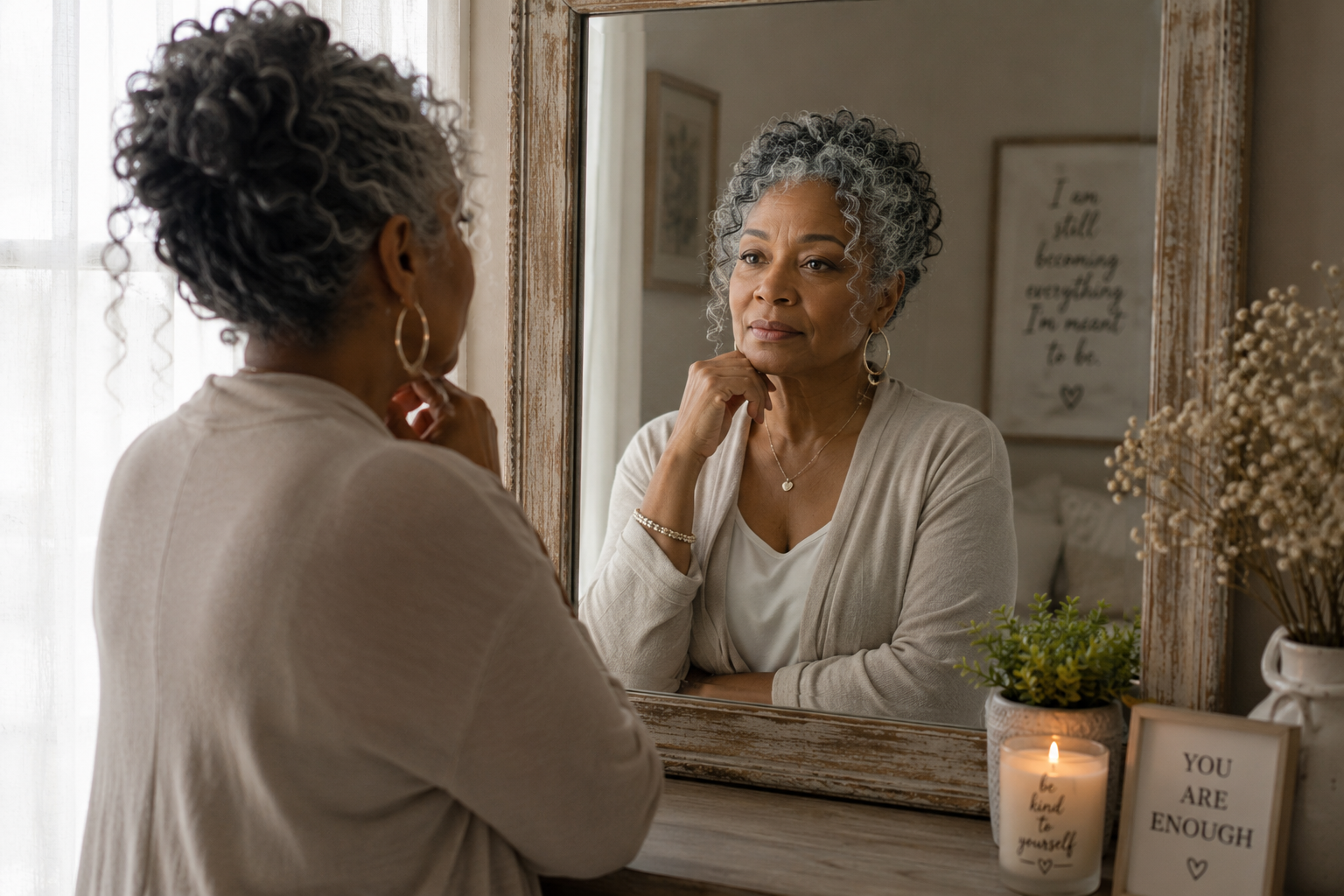
When Grief Changes Who You Are
Widowhood can leave you asking a question you never expected to ask: Who am I now?
For years, part of your identity may have been built around being someone's wife, sharing decisions, routines, responsibilities, dreams, and an ordinary life together. When your spouse dies, you don't only grieve the person you loved. You may also grieve the woman you were when the two of you were together.
Finding yourself again does not mean leaving your husband or your memories behind. It means discovering who you are now—and who you may still become.
You are allowed to change. You are allowed to grow. And you are still you. ❤️
Getting Through the Hard Days
On the days when grief feels especially heavy:
• Lower the expectations you place on yourself.
• Eat something, drink some water, and take your medications.
• Get dressed if you can—even if you're staying home.
• Step outside or sit near a window for a few minutes.
• Do only what truly needs to be done today.
When you need a little more support:
• Call or text someone who makes you feel safe.
• Let people help instead of automatically saying, “I'm fine.”
• Write down what you're feeling when you can't say it aloud.
• Give yourself permission to cry, rest, laugh, or remember.
• If today is simply about getting through today, that is enough.
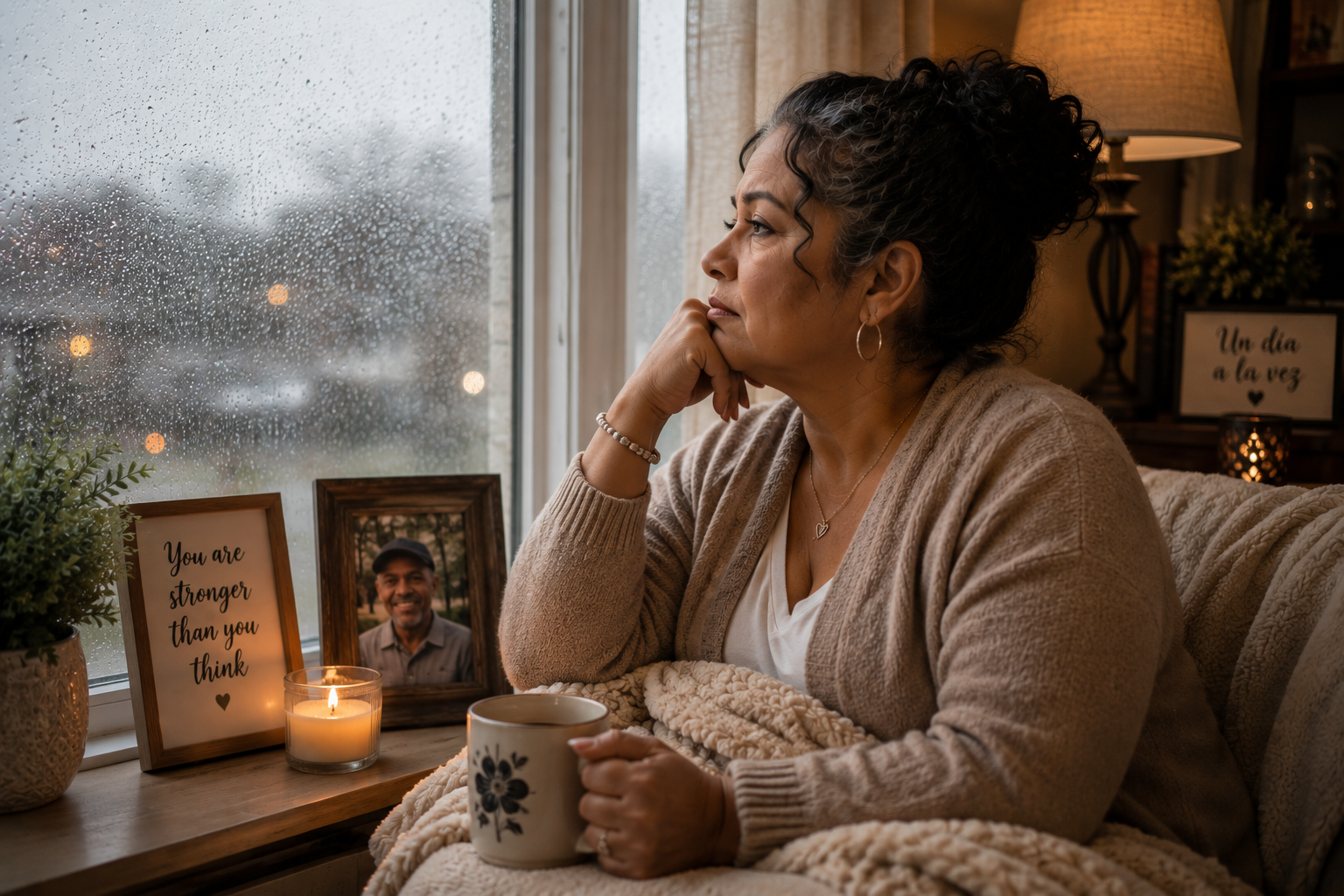
When Loneliness Hits
Loneliness can be one of the hardest parts of widowhood. You can be surrounded by family and friends and still ache for the one person who is missing.
You may miss having someone to tell the little things to. Someone beside you at dinner. Someone to laugh with, reach for in the night, or simply sit quietly beside you.
Loneliness does not mean you are failing to heal. It means someone mattered deeply, and their absence is deeply felt.
You do not have to fill every empty space right away. But you also do not have to face every lonely moment alone. Reach out. Accept an invitation. Call someone. Sit with people who understand. Take small steps back into the world.
Missing your husband and learning to live again can exist in the same heart. ❤️
Things People May Not Understand About Widowhood
Grief doesn't move in a straight line.
• You can have a good day and fall apart the next.
• A song, smell, photograph, or memory can bring grief rushing back.
• Anniversaries and holidays aren't the only difficult days. Sometimes an ordinary Tuesday hurts more.
• Laughing again does not mean you have forgotten him.
• There is no deadline for missing someone you loved.
Widowhood changes more than people see.
• Friendships and social circles may change.
• Making every decision alone can be exhausting.
• You may miss affection, touch, companionship, and intimacy.
• Being surrounded by people doesn't always stop loneliness.
• You don't need to “move on.” You are learning how to move forward while carrying love with you. ❤️

Giving Yourself Permission to Live Again
Grief can make happiness feel almost like a betrayal. The first time you laugh, enjoy a meal, take a trip, make new friends, or simply realize you had a good day, guilt may quickly follow.
But loving your husband does not require you to stop living because he died.
Living again does not erase your marriage, your memories, or the life you shared. You are not replacing him. You are allowing yourself to experience the life that is still in front of you.
You can miss him terribly and still have moments of joy. Both can be true. ❤️
Practical Things That Help After Losing Your Husband
Taking care of everyday life:
• Keep a simple list of bills and due dates.
• Put important papers together in one safe place.
• Accept help with meals, errands, repairs, or yard work.
• Make major decisions slowly when you have that choice.
• Create small routines for mornings and evenings.
• Handle one thing at a time. You do not have to figure out your whole future today. ❤️
Taking care of your heart and yourself:
• Stay connected with people who make you feel safe and understood.
• Give yourself permission to say no when you need rest.
• Talk about your husband when you want to. You do not have to avoid his name.
• Find reasons to leave the house, even if only for a short while.
• Allow yourself moments of laughter and enjoyment without guilt.
• Remember: moving forward does not mean leaving your husband behind. ❤️

When Everyone Else Seems to Move On
In the beginning, people call, visit, bring food, and ask how you are doing. Then, little by little, life carries them back to their own routines.
But your life did not simply return to normal. Your normal changed.
It can hurt when the phone grows quieter or people stop asking about your husband. Some may think enough time has passed. Others simply may not understand that grief does not disappear because the calendar keeps moving.
You are not behind. You do not owe anyone a timetable for your grief. Keep building your life at the pace that is right for you. ❤️
A Little More Support for Your Journey ❤️
Sometimes a few encouraging words aren't enough. You may need something you can hold in your hands, write in, return to on the difficult days, or use as a gentle guide forward. I created these resources especially for widows—to offer comfort, reflection, encouragement, and practical support as you find your way through grief.
